Why This Panel Matters
Building one strategy that can read both long and short conditions is difficult. Markets do not simply mirror themselves. A clean long setup can move differently from a clean short setup, and each product has its own rhythm when buyers or sellers take control.
Many one-direction indicators can work for a period of time, especially when the market is in the right regime. But when the market changes, that logic can expire quickly. RivetAlgo is built around product-specific behavior, so the strategy can evaluate both sides while still giving the trader control over which side is allowed to trade.
The Strategy Risk Management panel is where that control begins: direction, take profit, stop loss, and whether the trader wants to manage exits with fixed targets or adapt live with a trailing approach.
The Settings Users Actually Control
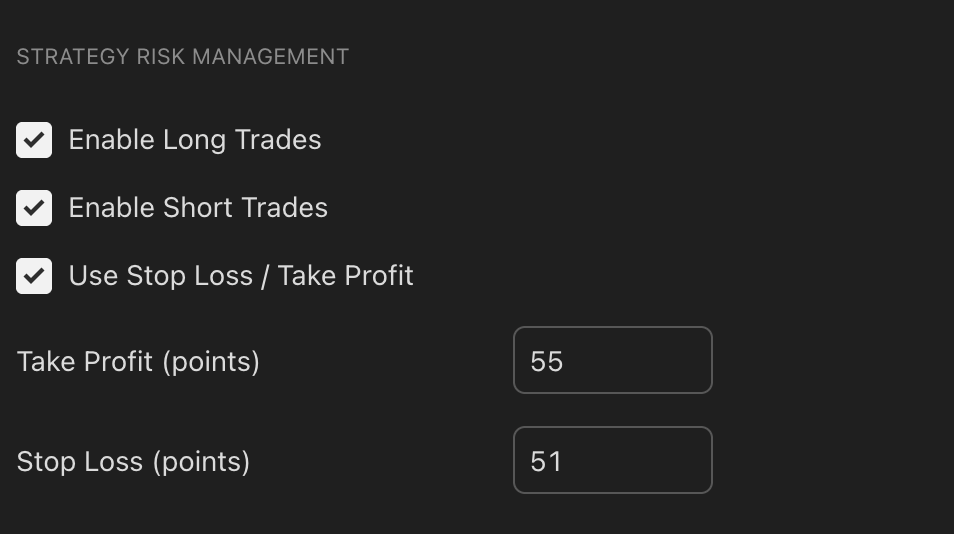
RivetAlgo does not need to reveal every internal rule for users to have meaningful control. The visible settings focus on the decisions that matter most in live trading: whether the strategy can take longs, whether it can take shorts, and how much room the trade has before the fixed target or stop is reached.
Direction Bias Is Still the Trader's Choice
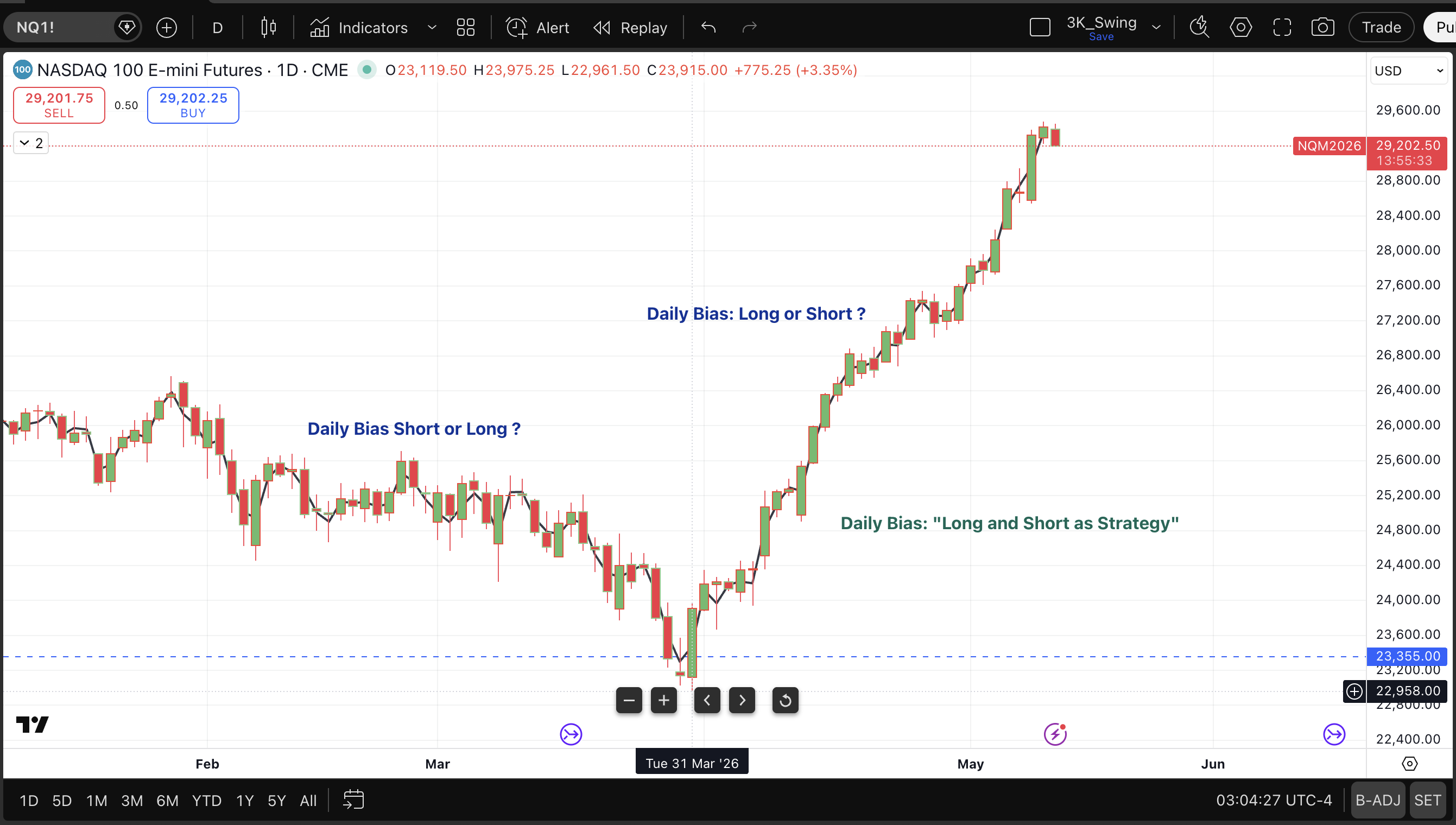
Some traders may want both long and short entries available. Others may prefer to trade only with their current market bias. For example, when AI demand, tech earnings, or broader market news keeps NQ and MNQ in a strong upward environment, a trader may choose to disable short trades and wait only for long entries that meet the strategy criteria.
This does not change the underlying chart logic. It changes what the strategy is allowed to act on. The indicator can still help a trader read context, but the TradingView strategy follows the permissions selected in the settings panel.
Fixed TP/SL Creates a Clear Baseline
The default TP and SL values are not random. They are shaped by real trade behavior and many backtested examples. In this setup, the strategy used a fixed 55-point take profit and a fixed 51-point stop loss.
That fixed baseline is useful because the strategy report stays consistent. A trade either reaches the target, reaches the stop, or exits by the strategy's configured rules. But live trading is not limited to one backtest assumption. A user can still adjust TP/SL values, use trailing logic, or exit manually when their plan calls for it.
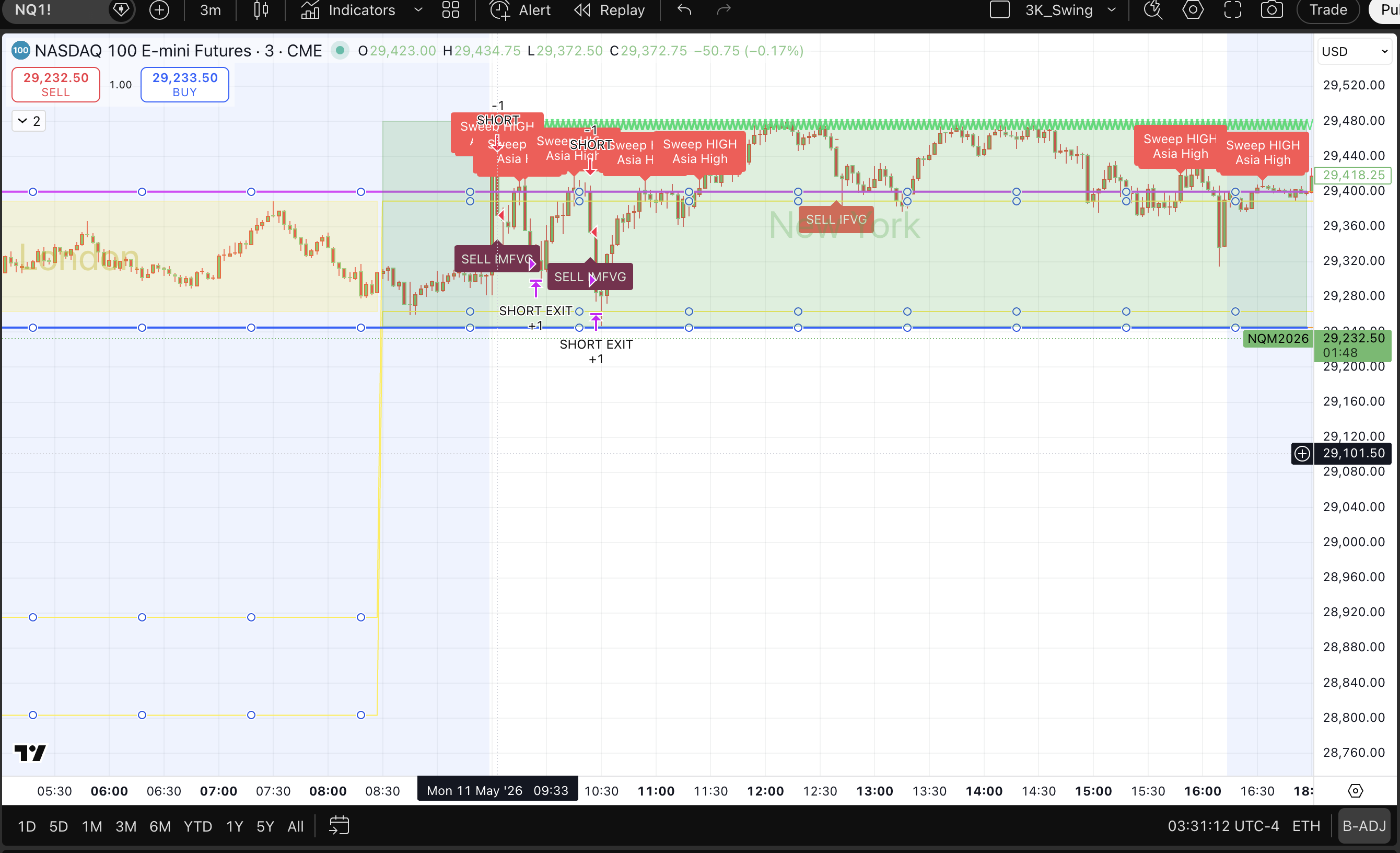
| Trade | Entry | Entry Price | Exit | Exit Price | Result |
|---|---|---|---|---|---|
| 39Short | May 11, 2026, 09:33 | 29,372.75 | May 11, 2026, 09:54 | 29,317.75 | +1,100 USD |
| 40Short | May 11, 2026, 10:24 | 29,354.00 | May 11, 2026, 10:27 | 29,299.00 | +1,100 USD |
A Reported Loss Can Still Teach Trade Management
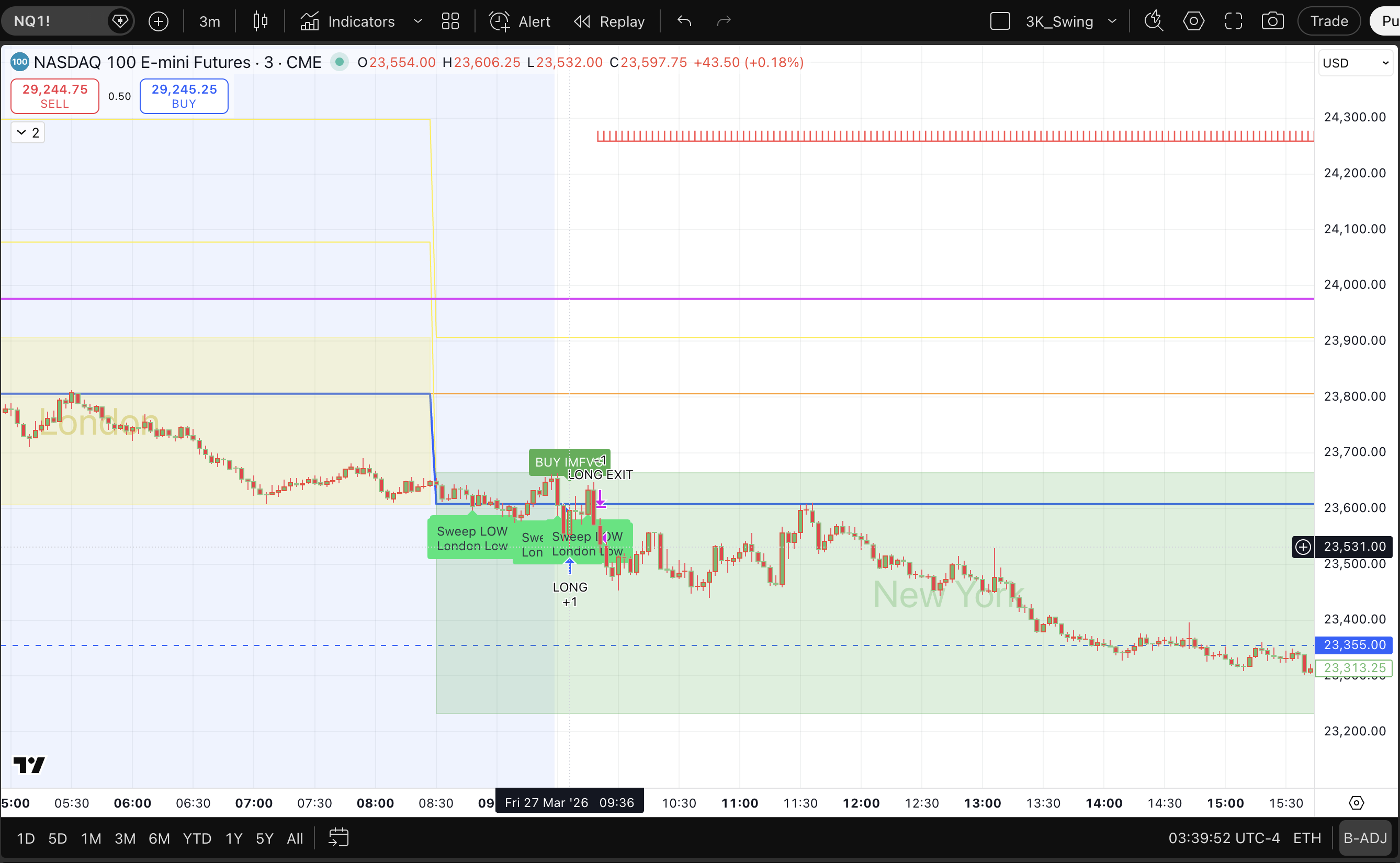
On March 27, 2026, the strategy entered a long trade around the 09:36 3-minute bar at 23,597.75. With the fixed settings shown above, the target was 55 points and the stop was 51 points.
Before the trade failed by the fixed strategy rules, price pushed as high as 23,647.25 around the 09:48 3-minute bar. That is roughly 49.5 points of open profit. It was close to the 55-point fixed target, but it did not reach the strategy's target before reversing.
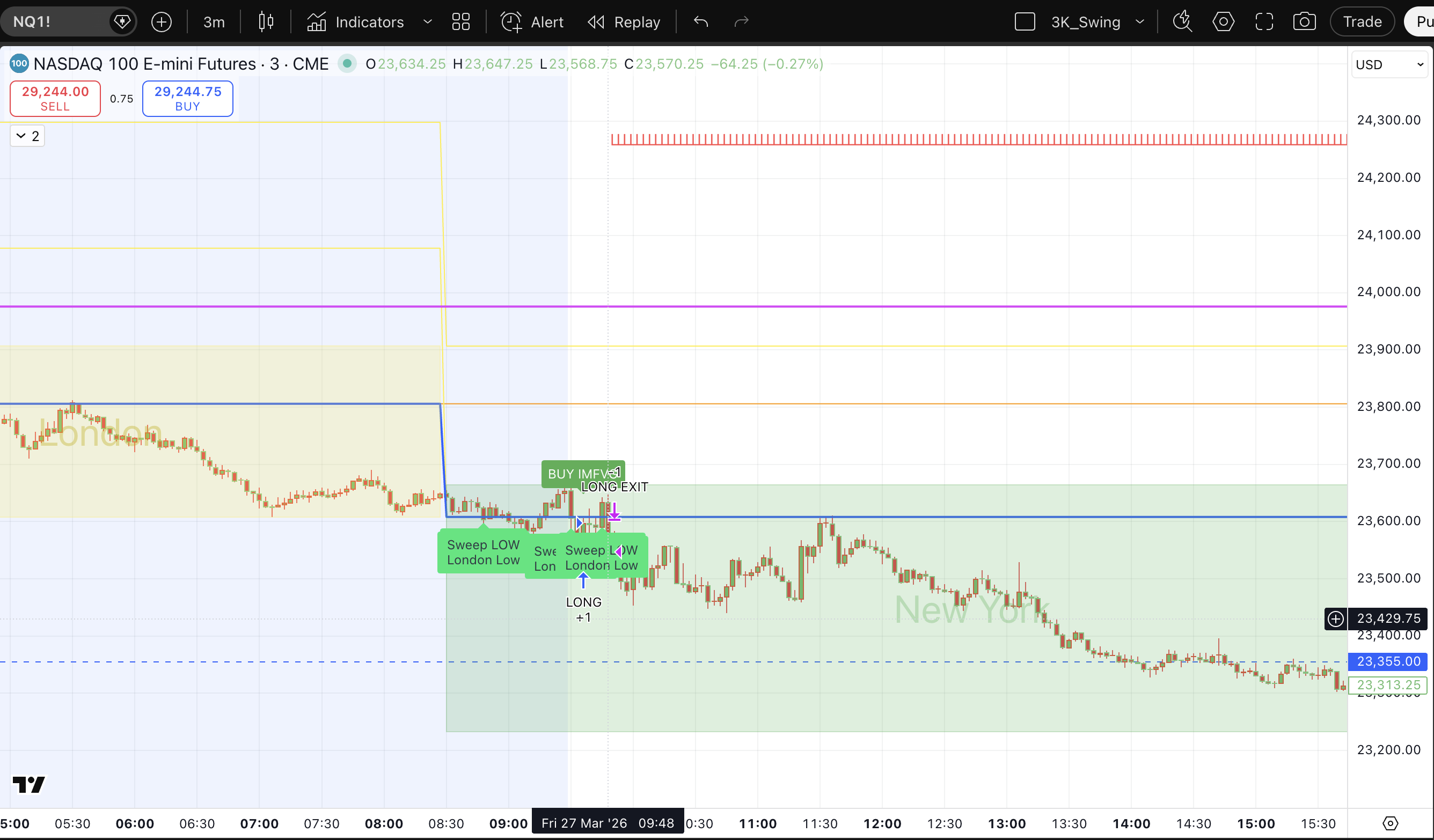
| Trade | Entry | Entry Price | Highest Area | Open Profit | Exit Price | Result |
|---|---|---|---|---|---|---|
| 20Long | Mar 27, 2026, 09:36 | 23,597.75 | Mar 27, 2026, 09:48 | +49.5 pts | 23,546.75 | -1,020 USD |
This is the difference between a strategy report and live execution. The report correctly marks the trade as a loss under the fixed 55/51 settings. A live trader, however, may decide to trail after 30 or 40 points, move the stop, or take a fixed 40 to 45 points based on their own plan.
Fixed Target or Trailing Protection
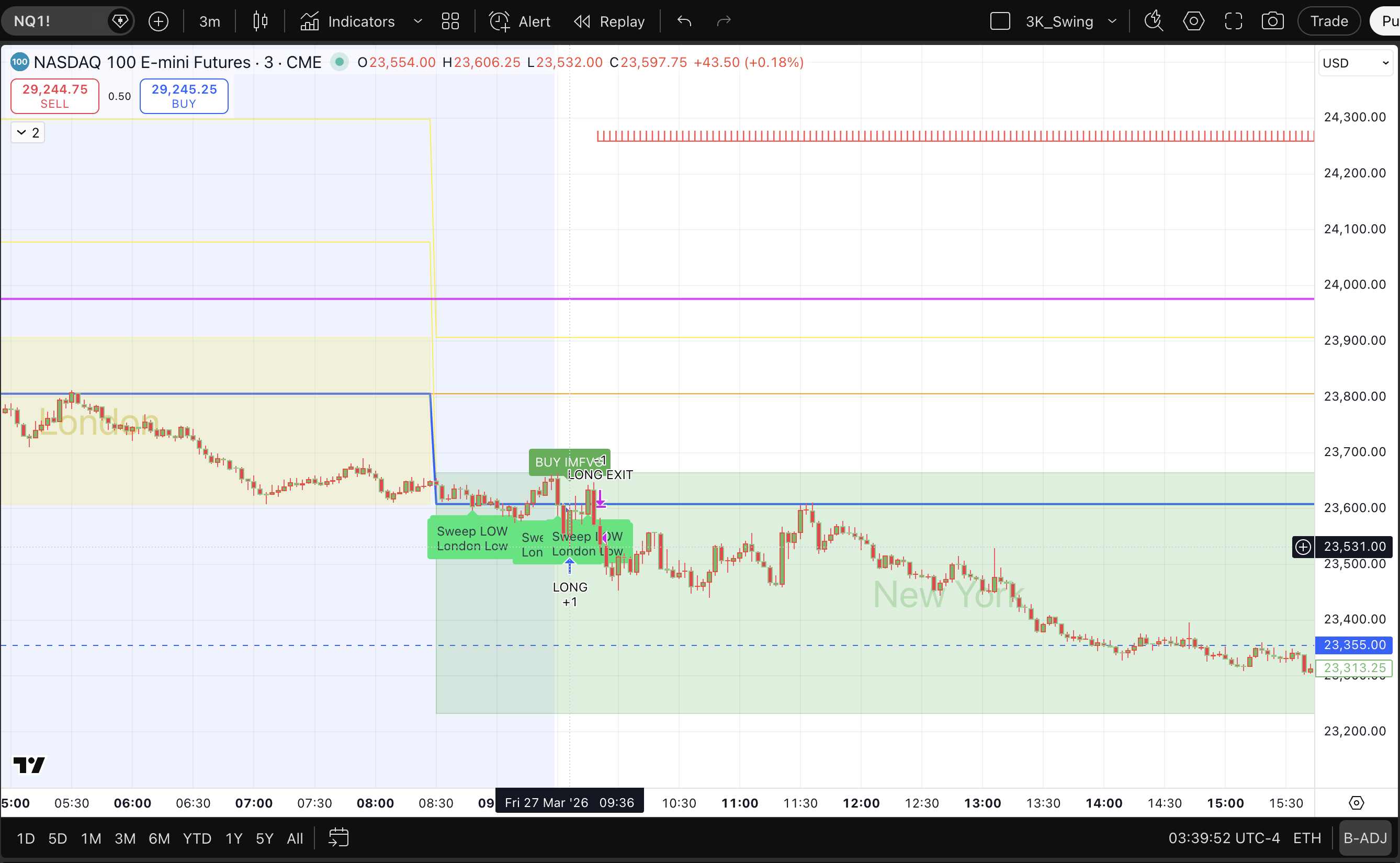
There is no single exit style that is always best. A fixed target creates clean reports and removes hesitation. A trailing approach can protect open profit, but it may also exit before a full target is reached. Manual exits give the trader the most discretion, but they also require discipline.
That is why the setting is not only about a number. It is about matching the strategy's behavior to the trader's account, risk tolerance, and preferred trade-management style.
Why This Control Matters
Strategy Risk Management is designed for traders who want the strategy logic, but still want account-level control over what the strategy is allowed to do.
- Trade only long, only short, or both directions depending on market bias.
- Use fixed TP/SL values to keep reports clean and comparable.
- Adjust risk settings when account size, volatility, or product behavior changes.
- Use trailing protection when open profit matters more than a full fixed target.
- Keep final discretion with the trader, especially in live conditions.
This is one of the main differences between a chart label and a usable strategy. RivetAlgo does not only ask, "Is there a setup?" It also asks, "Is this direction enabled, and how should this trade be managed?"
The Takeaway
A two-sided strategy is hard to build because long and short markets behave differently. The purpose of RivetAlgo's risk settings is to give traders access to that logic without forcing every trader to use the same permissions or the same exit style.
If a trader has a long-side bias, they can disable shorts. If they want a clean backtest baseline, they can use fixed TP/SL. If they want to protect live profit, they can adapt with trailing or manual exits.
The strategy report tells one truth: what happened under the selected rules. Live management gives the trader another layer of control.
Use the Playbook to understand how strategy settings behave in real trading examples, from direction control to exit behavior and daily account controls.