The Market Is Open Almost All Day. Quality Is Not.
Futures can trade nearly 24 hours a day, but every hour does not behave the same way. Volume, liquidity, speed, and price momentum often change when the market moves from Asia to London, then from London to New York.
A kill zone is a selected time window where a specific strategy expects better movement, cleaner liquidity behavior, or stronger follow-through. For NQ and MNQ ICT-style trading, these windows can matter because price often reacts around session highs, session lows, fair value gaps, and displacement.
The goal is not to trade more. The goal is to trade when the market is more likely to be worth your attention, then filter out low-quality periods that can drain focus and discipline.
What A Kill Zone Means
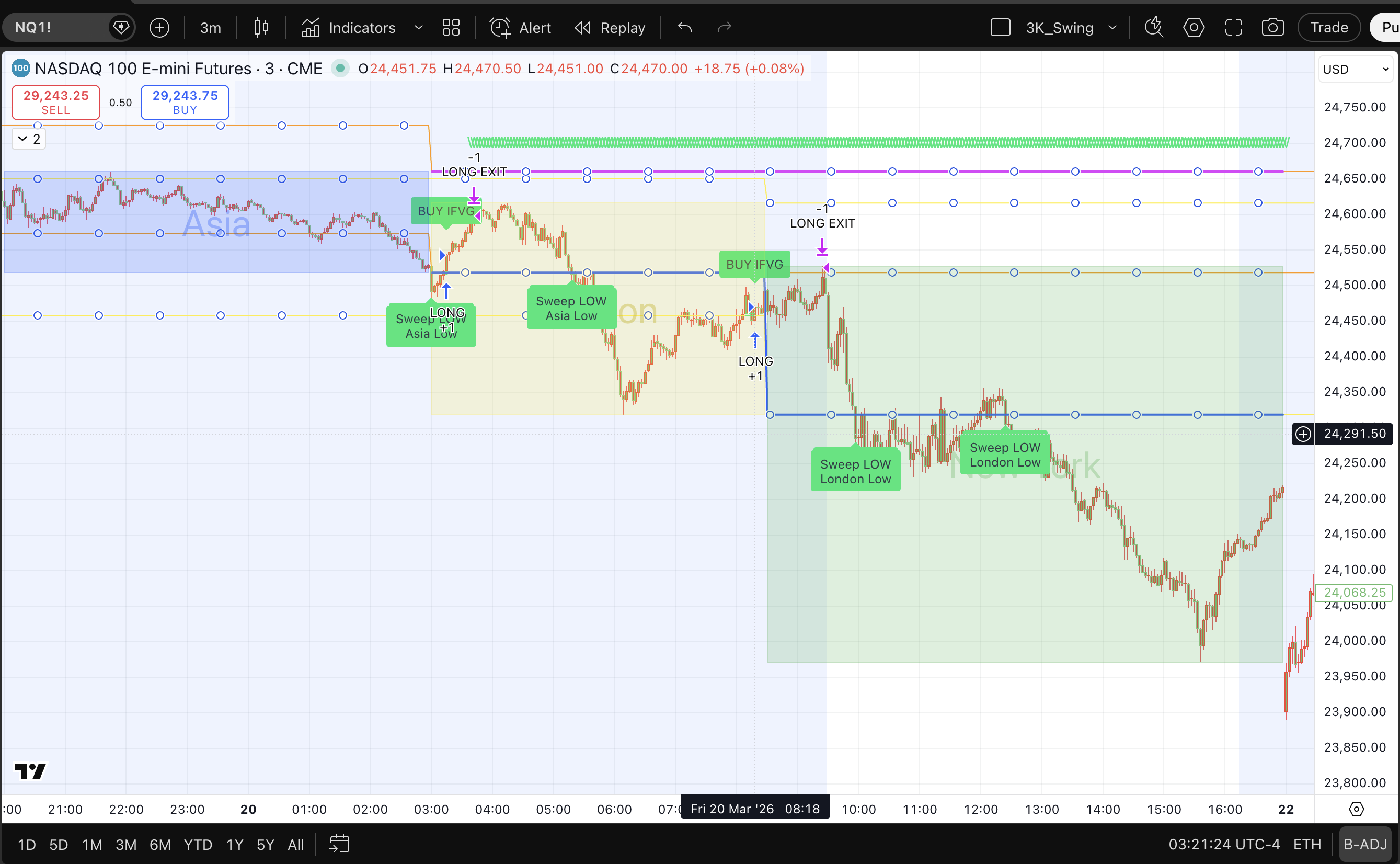
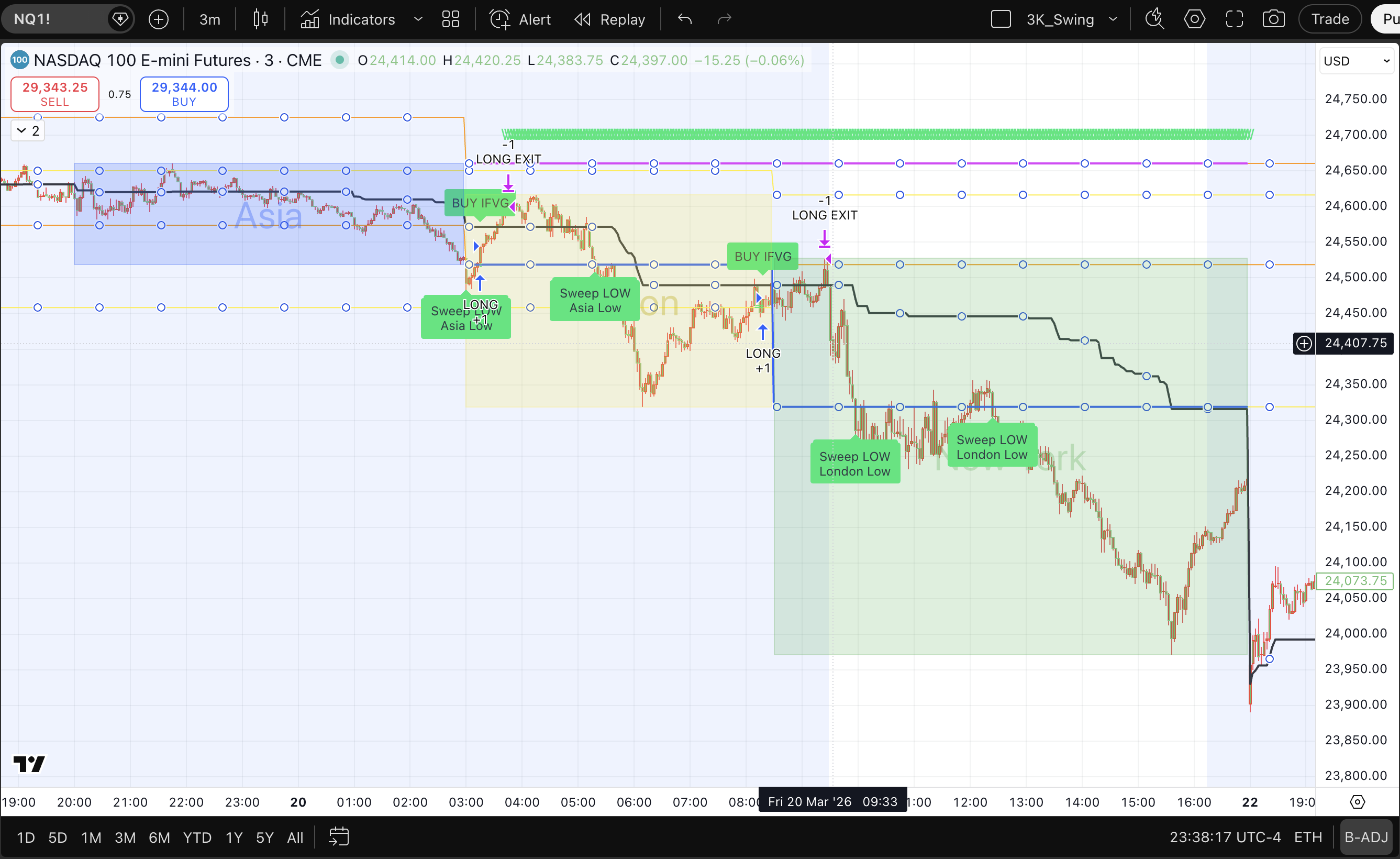
Asia can build the first range. London can sweep that range and create displacement. New York can bring stronger volume and expansion. That is why time matters so much for ICT-style NQ and MNQ models.
Not every RivetAlgo strategy uses this tactic. Kill-zone filtering is deployed only on specific products and strategy models, such as NQ or MNQ with ICT-based session logic.
Example 1: London Changes The Opportunity
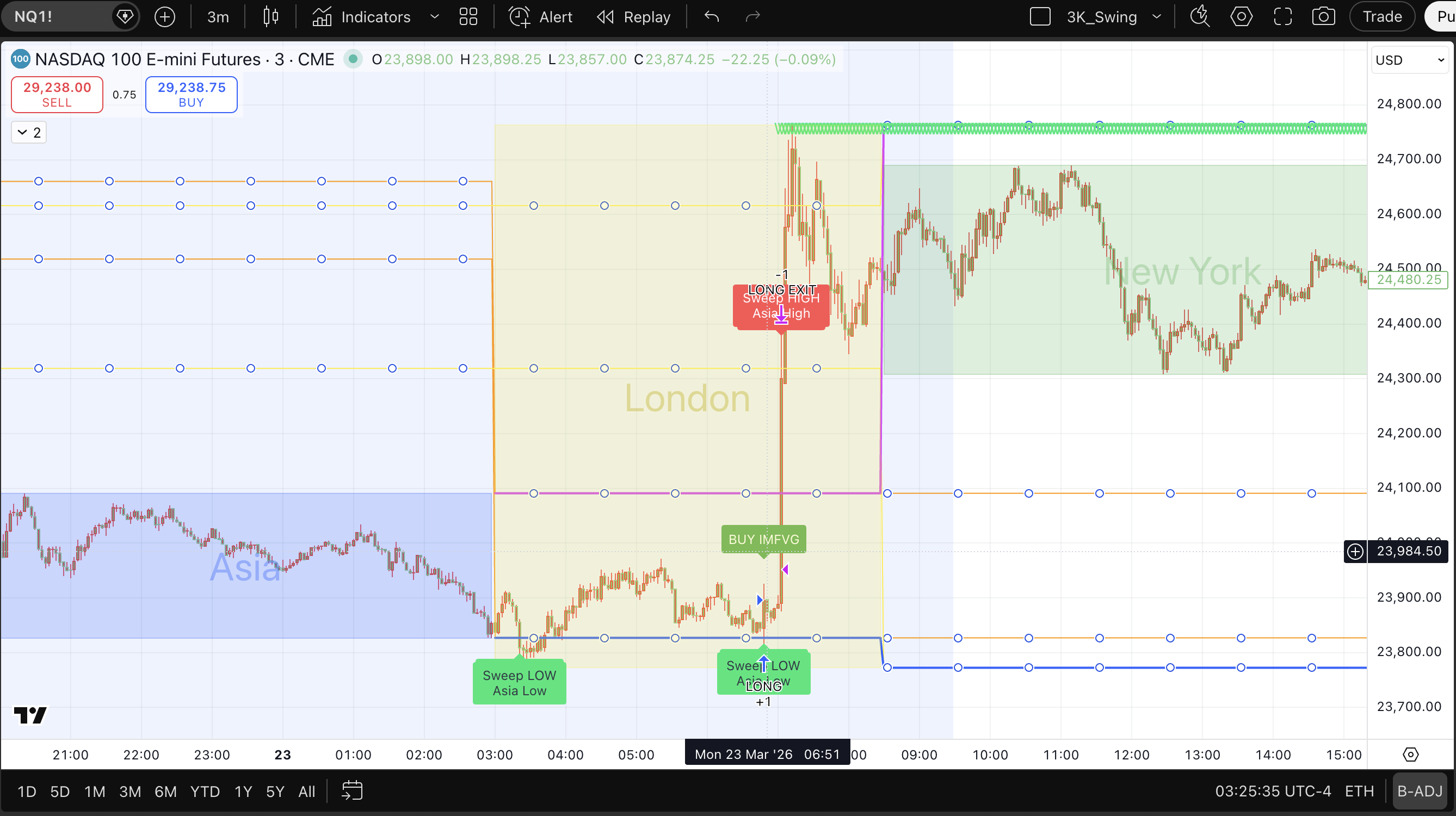
The first opportunity is not only about direction. It is about the session. During Asia, price may build a slow range around the overnight high and low. When London opens, that same range can become liquidity.
In the chart, price first reacts around the Asia low area, then moves aggressively during the London window. That is the kind of behavior kill-zone logic is designed to recognize: the market is not random by time, and the best setup often appears when the right session pressure arrives.
Example 2: New York Can Expand The Move
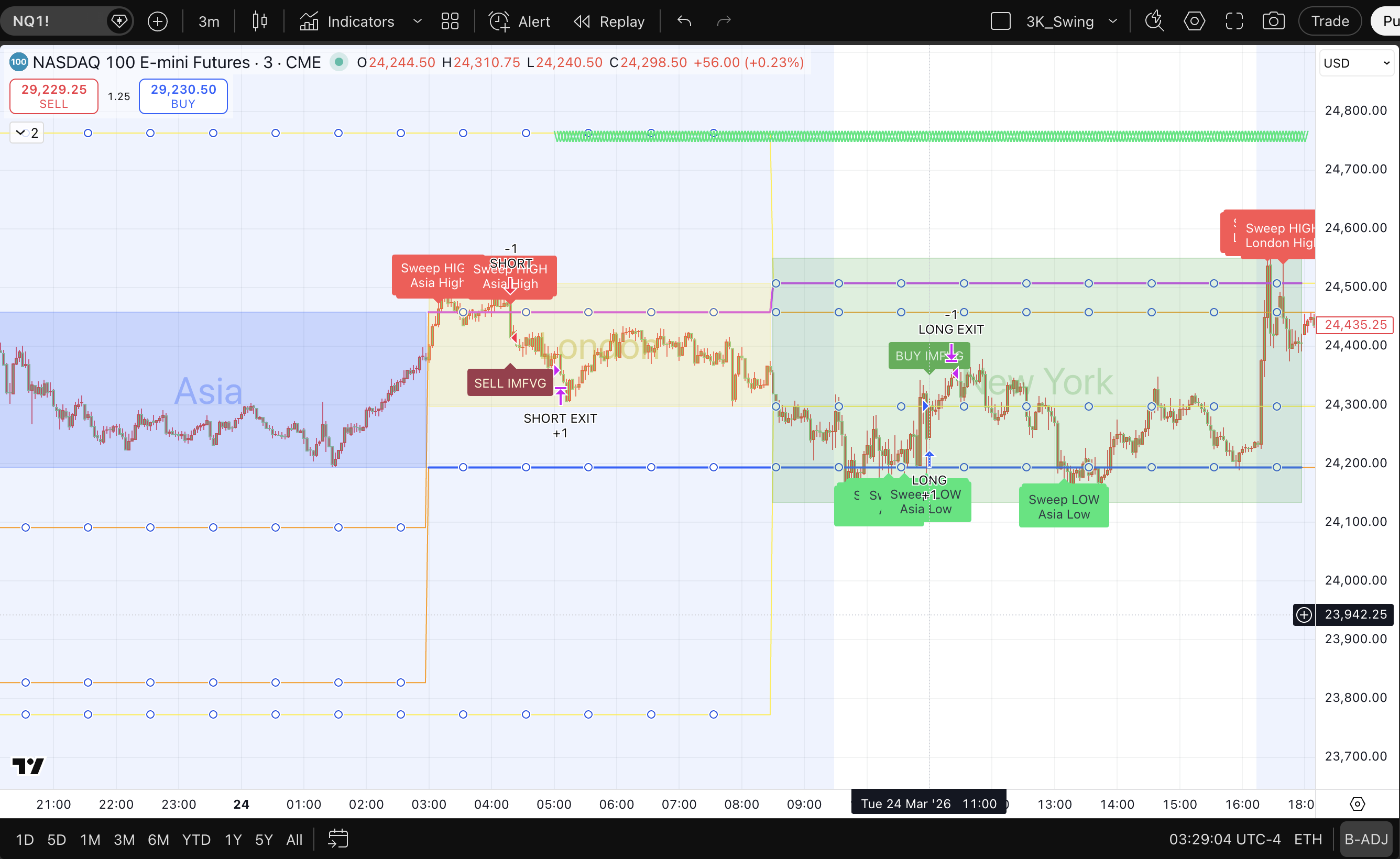
A setup that looks slow during Asia or London can expand sharply once New York volume enters. That is why the same NQ chart can behave like three different markets inside one trading day.
In this example, the London section creates important session lows, and the New York section later carries the larger directional movement. A trader who treats all hours equally may miss the difference between a quiet setup and a session-driven opportunity.
| Trade | Entry | Entry Price | Exit | Exit Price | Result |
|---|---|---|---|---|---|
| 14Short | Mar 24, 2026, 04:18 | 24,414.25 | Mar 24, 2026, 05:06 | 24,359.25 | +1,100 USD |
| 15Long | Mar 24, 2026, 11:00 | 24,298.50 | Mar 24, 2026, 11:21 | 24,353.50 | +1,100 USD |
The point is not that every kill-zone trade wins. The point is that time can help the strategy focus on the periods where movement, liquidity, and opportunity are more likely to appear.
The Manual Problem: You Cannot Watch Everything
If you want to catch every Asia, London, and New York opportunity by hand, you may need to monitor the market for more than 10 hours. That is where most traders start losing patience, emotional control, or execution quality.
Kill zones are useful because they narrow the battlefield. Instead of staring at every candle all day, the trader can define the windows that matter most for that strategy.
But even with good time windows, watching manually can still become exhausting. A trader might miss the alert, hesitate after a loss, chase after a fast move, or keep trading through a low-quality period simply because the chart is open.
How RivetAlgo Helps With Kill Zones
RivetAlgo can assist inside each selected kill zone so the trader does not have to burn energy watching every minute of the session. The strategy can use time filters, indicator alerts, and automation rules to stay aligned with the trading plan.
- Highlight the active session so Asia, London, and New York behavior is easier to separate.
- Filter entries so the strategy can focus on selected high-quality time windows.
- Send alerts when the ICT model detects relevant conditions, such as sweeps, momentum, or fair value gap opportunities.
- Support automation through strategy and indicator alerts when the user chooses that workflow.
- Reduce emotional pressure by letting the system monitor the defined windows instead of forcing the trader to stare at the chart all day.
This is the difference between a trader reacting to every candle and a strategy waiting for the right time, the right product, and the right setup to align.
What Should You Do About It?
Do not treat the full 24-hour futures market as one equal trading block. For NQ and MNQ ICT-style models, time is part of the setup. The market can offer different behavior in Asia, London, and New York, so your plan should decide which windows deserve attention.
Use kill zones to focus on the periods where the strategy has the best reason to act, then use alerts or automation to avoid emotional over-monitoring. The goal is to seize better opportunities without giving the screen more control over your day than the trading plan.
Not every strategy should use this setting. But when the product, model, and session behavior support it, kill-zone logic can help filter lower-quality periods and keep execution tied to the highest-value time windows.
Use the Playbook to understand how strategy settings behave in real trading examples, from entry logic to session filters, alerts, automation, and daily control.